Tag: BLOG

  • In wake of coronavirus, cannabis firms look for packaging outside China

    In wake of coronavirus, cannabis firms look for packaging outside China

    With factories in China shut down to prevent the spread of the coronavirus, some marijuana companies have turned to manufacturers in the United States, India, and Mexico to source packaging for their products.

    For example, Cleveland-based Grove Bags has seen such a big spike in its business since the coronavirus outbreak that it’s had to turn business away.

    KushCo Holdings, which provides ancillary products and services to the state-legal cannabis and CBD industry, is exploring packaging options in the United States, Taiwan, and India.

    KushCo had started looking beyond China for packaging when President Donald Trump imposed tariffs on Chinese goods, said Arun Kurichety, the executive vice president and general counsel of the Cypress, California-based company.

    MJBizConNEXT Direct - Virtual Event

    “As a prudent company, we look every day at other opportunities to source goods,” Kurichety said.

    “Already, some of our focus has shifted from Chinese manufacturers to other countries. Our concentration in terms of products from China has decreased.”

    Another example is Wick & Mortar, a Seattle-based branding agency that offers services such as packaging design and production. It ordered a six-month supply of packaging from China for its client Navona, a grower that sells packaged flowers and pre-rolls, company CEO Jared Mirsky said.

    But with the spread of coronavirus, it’s started looking elsewhere for packaging.

    “This entire debacle has forced us to start leveraging relationships in Mexico and India,” Mirsky said. “Once they get back to work (in China), they’re probably going to be backed up quite a bit.”

    It’s not so much that the virus can live on the surface of plastics, glass, or metals, but rather that the factories where packaging is made have shut down to prevent its spread.

    Turning business away

    Grove Bags is running three shifts a day seven days a week to try to keep up with demand resulting from the lack of packaging available from China, said Jack Grover, CEO of the Ohio company.

    “We are over capacity and are turning business away, which is obviously something you never want to do,” Grover said.

    “It’s been extremely difficult. We keep a good inventory of materials on hand in the U.S. but have had to tell customers we may face supply constraints.”

    Grover, who spoke to Marijuana Business Daily on March 4 while attending Pack Expo East in Philadelphia, said there are many packaging businesses in east Asia and Italy, where the coronavirus hit the hardest, and that representatives from those companies did not attend the conference.

    Current situation in China

    Manufacturing facilities in eastern China have shut down, but several in western China have been allowed to reopen with proper certification.

    Still, those operations are working with about half the employees they typically have.

    Some cannabis companies are feeling the impact of the coronavirus, while others stocked up on packaging in anticipation of the Chinese New Year Jan. 25-Feb. 8, during which many factories shut down to celebrate.

    Those companies might have ample supply for now, but uncertainty over how long the coronavirus will continue to spread has many packaging companies tapping solutions in other markets such as the United States, India, and Mexico.

    “We anticipate disruption every year and preorder anticipating there will be a slowdown for a month,” KushCo’s Kurichety said.

    “Naturally, there have been disruptions in the supply chain because of the coronavirus outbreak, but we’re fortunate to have prepared in advance, have sufficient inventory in stock beforehand, and have strong relationships with our suppliers to minimize the overall disruption.

    “Unfortunately, some smaller and less-resourced companies haven’t been able to say the same.”

    And while it’s unclear whether a person can contract coronavirus by touching a surface that has the virus on it, a recent study published in the Journal of Hospital Infection suggests the disease can survive on objects for more than a week.

    That’s why it’s important for marijuana businesses sourcing goods from China and Italy to understand the practices of the manufacturers they’re buying from, said Andrew Kline, director of public policy for the Washington DC-based National Cannabis Industry Association.

    “If I were a distributor buying a product from China, I would want to know a lot about the manufacturing practices of that manufacturing facility,” Kline said.

    “Are they wearing masks? Are people sneezing on the things they’re putting together? Are they testing employees for the virus? What actions are they taking? It’s a real issue that’s not just going to affect cannabis.”

    Margaret Jackson can be reached at margaretj@mjbizdaily.com

  • Marijuana retailers near Illinois borders benefit from out-of-state customers 420.

    Marijuana retailers near Illinois borders benefit from out-of-state customers 420.

    Marijuana retailers near Illinois borders benefit from out-of-state customers 420.

    Cannabis retailers in Illinois border towns are seeing strong sales to customers from neighboring states but are spending time and money training their employees to warn people that it is unlawful to transport marijuana across state lines.

    Illinois had a strong kickoff to its adult-use cannabis market, with recreational marijuana stores selling nearly $40 million worth of products during the first month of sales.

    While adult-use marijuana shops in Illinois declined to report the exact percentage of customers who came from other states, they did describe the number as “many.”

    MJBizConNEXT Direct - Virtual Event

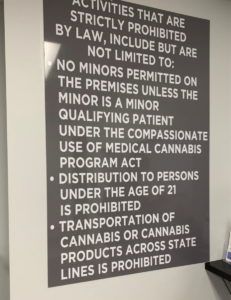
    Out-of-state customers who are 21 years old and have a valid driver’s license can purchase cannabis in Illinois, which offers expanded sales opportunities to marijuana shops that are near the state’s borders in particular. But it is illegal to cross state lines with cannabis.

    Marijuana retailers near the Illinois border are taking the time to train employees so they can let customers know the law, whether it’s through conversations, posting signs, or providing information on their counters.

    “We value our customers and encourage them to follow the law,” said Kathleen Olivastro, regional director of Illinois Supply and Provisions’ parent company Ascend Wellness Holdings, a Waltham, Massachusetts-based, vertically integrated operator with assets in Illinois, Massachusetts, Michigan, and Ohio.

    “Ultimately, individuals are responsible for any legal ramifications, including transporting across state lines, once products leave the (store).

    “We do encourage anyone considering purchasing cannabis to research and understand the laws before they come in.”

    A sign at Illinois Supply and Provisions warns customers about crossing state lines with marijuana. The shop is located in Collinsville, Illinois, which is about 15 miles from St. Louis’ Gateway Arch.

    Illinois Supply and Provisions, located about 15 miles from St. Louis’ Gateway Arch in Collinsville, Illinois, has served customers not only from Missouri but also from Florida, Indiana, Iowa, Kentucky, and Wisconsin.

    Stores located near the border have the opportunity for stronger sales but must ensure that their employees have more extensive training than staffers in stores that are not near state lines.

    Nic Easley, CEO of Denver-based 3C Consulting, said he advises retail clients to create a questionnaire for customers to answer when they’re checking out that includes an item about agreeing not to take cannabis across state lines.

    He’s also counseled clients not to sell cannabis to customers if they have alluded to the fact they’ll be doing something illegal.

    “You’re putting the onus on individuals for safe and responsible cannabis use,” Easley said.

    “Whenever you have something on one side (of a border) that you don’t have on the other, people are going to come. I love border locations for capturing new markets.”

    Medical Mondays

    Illinois Supply and Provision, formerly HCI Alternatives, reserves Mondays for medical marijuana patients.

    Both Illinois and Missouri residents who hold MMJ cards can shop in the store. However, Missouri medical cardholders are not permitted to purchase MMJ products at the store but can purchase recreational products on Mondays – and pay adult-use sales tax rates on products.

    “IS&P feels it is important to give Missouri medical patients – some with serious health challenges – access to the dispensary on a day that is typically less busy, even though they must be treated as adult-use customers,” Olivastro said.

    Jushi Holdings, multistate cannabis, and hemp operator based in Boca Raton, Florida, recently acquired two Illinois medical cannabis dispensaries from Colorado-based The Green Solution, including one in Sauget, across the river from St. Louis.

    The company has received approval to operate the dispensaries as adult-use retail stores under its Beyond/Hello brand, which is likely to occur by early March. Ultimately, Jushi plans to have four adult-use retail stores open in Illinois by the end of the year.

    Jushi President Erich Mauff said the community has proved receptive to the store adding adult-use sales to its offerings.

    “They’re really excited for us to be there,” Mauff said. “They’ve been great supporters of us over the last four years and are keen for us to get the adult-use up and running.

    “But we can only do that once we can protect the medical patients and have an uninterrupted supply of marijuana.”

    Despite its location, just 4½ miles from St. Louis, medical patients from Missouri will not be able to purchase medical marijuana from Beyond/Hello.

    As of Feb. 19, 33,490 Missourians were registered as medical marijuana patients even though the state’s first dispensaries aren’t expected to open until late spring or early summer.

    “An individual must be an Illinois resident to be registered as a patient,” Mauff said. “There is no medical cannabis reciprocity between the state of Missouri and Illinois.”

    Emphasis on compliance

    When Jushi rebrands its Sauget shop to Beyond/Hello and opens to adult-use customers – people who are 21 with a valid ID – it will sell to Missourians. The store will train budtenders to ensure customers who are not Illinois residents are aware that crossing state lines with marijuana is illegal.

    “A priority for the company will be continually emphasizing communication of all compliance requirements,” Mauff said.

  • Why You Need to Know Your State’s Marijuana Laws

    Why You Need to Know Your State’s Marijuana Laws

    Why You Need to Know Your State’s Marijuana Laws

    Slowly but steadily, marijuana is becoming legal recreationally around the country — but federally, cannabis remains a Schedule I drug. Not only does that mean that you can’t take your weed across state lines without risking a felony; it also means that marijuana laws can vary significantly from state to state, and users shouldn’t expect to be able to buy and enjoy marijuana the same way wherever they go. Regardless of how long your state has enjoyed legal recreational weed, you might do well to brush up on the current weed regulations in your state. Here’s why.

    Dispensary Locations Have Broadened

    Often, when states first dip their toes into legalizing recreational weed, they are extremely conservative in their legislation in an attempt to make the new laws appealing to moderate voters and to eliminate any fears that the legal drug will have a serious impact on residents’ safe, comfortable lifestyles. Typically, the most stringent rules are where dispensaries can be located and who will be licensed to own and operate them. Unfortunately, this often means that the first dispensaries in a state are in inconvenient areas, far from more popular shopping districts — and worse, it has largely resulted in the legal marijuana industry being dominated by wealthy white business owners.

    A few states have worked hard to change this. For example, in Illinois, marijuana dispensary licenses were prioritized in communities historically plagued by anti-drug legislation, so black and brown entrepreneurs have a greater opportunity to recover from past wrongs and thrive. Other municipalities have loosened their zoning laws, so dispensaries can open in higher-traffic areas of town. If you have been visiting the same, inconvenient dispensary for years, you might look into where dispensaries are opening closer to home.

    Additionally, you might investigate laws relating to where it is legal to partake in your marijuana goodies. Largely, states want you to use weed at home, far from the public eye; smoking in hotels, restaurants and even dispensaries is against the law. However, some states are rethinking this regulation. By permitting marijuana use in specific locations, like dispensaries or weed-themed hospitality businesses, states can bolster their cannabis industry, which benefits marijuana users and state legislators, alike.

    Product Accessibility Has Increased

    Thanks largely to the COVID-19 crisis, many states have deemed marijuana to be an essential product and protect its access to users in states where medical and recreational dispensaries operate. Even better, to keep that at-risk safe from infection, governments have loosened rules regarding how users can acquire the cannabis products they need. For instance, in Florida, medical marijuana patients can now make orders for marijuana products online and pick up their purchases at the dispensary curb, which was previously not permitted. Additionally, in Washington State, dispensaries are now allowed to make home deliveries, which is something patients and recreational users have been seeking for years.

    While these regulations are new to some states, they have long been standard in others. By understanding how your state regulates marijuana accessibility — where you can buy weed products, how you can buy them, where you can see them, how you can come to possess them, etc. — you might be able to make your marijuana experience safer and more convenient, both now in the midst of the pandemic and into the future if these loose regulations remain in place.

    Possession Limits Have Changed

    Another marijuana issue affected by the new coronavirus is possession limits. To help states differentiate between legal use and illegal sale — and to reduce the likelihood of substance abuse — all states have imposed limits on how much cannabis products a user can buy at once time and how much they are permitted to have on their person. This extends to the number of cannabis plants that people are allowed to grow and harvest at home.

    Yet, because many people cannot and should not leave their homes as COVID-19 rages on, states are rethinking how much product individuals should be allowed to possess. Typically, possession limits are relatively meager, but these days, some states are considering increasing limits to help users build a 90-day stockpile, which reduces their need to venture into public. Regulation regarding personal plant cultivation, as well, could shift as a result of this crisis.

    It is never a bad idea to know the law, and with something as controversial as cannabis, knowing the law could keep you safe and out of trouble. Especially as marijuana regulations continue to flex and change, you should stay abreast of weed laws in your state — and in any states, you visit.

    No Information on smartweedshop.com should be used to diagnose, treat, prevent or cure any disease or condition.

  • Legalizing medical cannabis reduces opioid overdose deaths? Not so fast, a new study says

    Legalizing medical cannabis reduces opioid overdose deaths? Not so fast, a new study says

    Legalizing medical cannabis reduces opioid overdose deaths? Not so fast, a new study says.

    Amid the search for solutions to the opioid epidemic, which kills an estimated 130 Americans every day, some argue that increased access to cannabis could reduce this devastating toll. Part of their reasoning? A 2014 paper published in JAMA Internal Medicine reported lower opioid overdose death rates in states with medical marijuana laws.

    A study published Monday in PNAS contradicts that widely cited paper, raising new questions about whether and how medical marijuana can affect the opioid crisis.

    The 2014 study found that between 1999 and 2010, states with medical cannabis laws had a nearly 25% lower average rate of opioid overdose deaths than states without such laws. Much has changed since 2010–34 states have now legalized medical marijuana and the number of opioid overdose deaths was six times higher in 2017 than it was in 1999 — so Stanford University researchers decided to replicate the original study and expand its analysis to include seven more years of data.

    ADVERTISEMENT

    When they limited their analyses to the same period as the original study, they saw the same trend. But when they expanded the time frame through 2017, the association between medical marijuana laws and opioid overdose deaths reversed: States with medical marijuana laws had average rates of opioid overdose deaths that were nearly 23% higher than those without these laws.

    Related:

    Top Senate Republican outlines a path forward for bipartisan drug pricing bill

    Lead author Chelsea Shover, a postdoctoral research fellow in psychiatry at Stanford, said this apparent reversal is cause for concern. The 2014 study has been cited in more than 350 scientific articles and drew significant public and media attention. Advocates, industry representatives, and policymakers point to the 2014 findings to argue that marijuana liberalization could help address the opioid epidemic.

    ADVERTISEMENT

    “It’s become such a pervasive idea,” said Shover. “It would be amazing if it was this simple, but the evidence is telling us now that it’s not.”

    It’s unlikely that the change in findings means that medical marijuana laws were once helpful and are now harmful, Shover said. Instead, as she and her colleagues wrote, the findings suggest that the relationship between medical marijuana laws and opioid overdose deaths “is spurious.”

    “This isn’t to say that cannabis was saving lives 10 years ago and it’s killing people today,” said Shover. “We’re saying these two things are probably not causally related.”

    Since the Stanford study used the same methods as the original, Shover said it should garner just as much attention. Advocates and policymakers that pointed to data from 2014 should be interested to know that a longer time frame led to a very different result.

    Wayne Hall, a professor at the University of Queensland Centre for Youth Substance Abuse Research in Australia, said the 2014 study made an impact outside the United States. “It’s been cited in my own country as compelling evidence that medical cannabis reduces opioid overdose deaths,” he said. “It will be interesting to see what the response is to the new findings.”

    Dr. Sharon Levy, director of the adolescent substance use and addiction program at Boston Children’s Hospital and associate professor of pediatrics at Harvard Medical School, has previously expressed concerns about marijuana liberalization as a method to address the opioid epidemic. The relationship between marijuana use and opioid use is extremely complex, Levy said, and poorly understood.

    “My life’s work is devoted to helping people with addiction,” said Levy. “But this is the wrong approach.”

    Related:

    Access to medical cannabis: a new health care disparity

    Like opioids, medical marijuana is often sought out to manage pain. In fact, according to a 2018 report by New York’s medical marijuana program, the majority of people registering for the program listed severe or chronic pain as their primary condition. If medical marijuana is available as an option for dealing with pain, some people might use it instead of opioids — at least that’s the hypothesis. Several states have even added opioid dependency or “all conditions for which opioids could be prescribed” into their list of qualifying conditions for medical marijuana.

    It’s a plausible idea, Shover noted, but these studies should not be considered evidence that it would work. Both the 2014 study and her research were ecological studies. These examine exposures and outcomes at the population level, but cannot capture what is happening at the individual level. In this case, these studies can’t demonstrate that individuals decided to replace opioids with cannabis but only show the number of overdose deaths after states passed medical marijuana laws. Any number of other changes in the state could be factors.

    There’s another important limitation. “These large population studies don’t show causality,” said Yasmin Hurd, a neuroscientist, and director of the Addiction Institute at Mount Sinai in New York. “There is no evidence that the changes in medical cannabis laws correlate directly to opioid overdose mortality.”

    To get a better idea about how these two factors relate, Hurd said large-scale clinical trials could better reveal how individuals use marijuana and respond to it, and whether cannabis availability could reduce the use of opioids. One of Hurd’s recent studies, for example, found that cannabidiol (CBD) could decrease craving and anxiety. But, she said, more studies and larger clinical trials are needed to confirm this finding.

    “In a time of an epidemic, we have to think differently,” said Hurd. “We have to be bolder in pushing forward clinical trials on a much faster timeline than we have in the past.”

    “This isn’t to say that cannabis was saving lives 10 years ago and it’s killing people today. We’re saying these two things are probably not causally related.”

    STANFORD’S CHELSEA SHOVER, THE PAPER’S LEAD AUTHOR

    The issue of one study contradicting another is not unique to marijuana liberalization and the opioid crisis. Reproducibility is an important and often overlooked aspect of scientific research. Preliminary studies with new and exciting findings understandably garner attention, but it often takes some time before they can be replicated.

    The hype surrounding new studies can be especially problematic when they are used to shape public opinion and influence policy decisions. In this case, if the 2014 study is being used to make decisions about how to address the opioid crisis, it’s important to verify its findings.

    Hurd agreed. “Is cannabis less of a mortality risk than opioids? Absolutely. Hands down,” she said. “But there’s no research that says cannabis use per se decreases opioid overdose. You can’t make your medical cannabis laws based on that [hypothesis].”

    Medical marijuana does have other therapeutic uses, Shover said, and there are plenty of other, well-supported reasons to consider medical and recreational marijuana laws. “It just doesn’t seem like reducing opioid overdose mortality is one of those benefits,” she said.

    There are several strategies for preventing opioid overdose that have more evidence behind them, including increased access to known treatments like methadone and overdose reversals like naloxone. If medical marijuana laws don’t affect the number of opioid overdose deaths, then passing them could give policymakers and the public a false sense of addressing the issue.

    “The risk is distracting attention away from much more effective interventions that should be implemented to reduce overdose deaths,” said Hall.

  • Medical Marijuana Components: (E)-BCP

    Medical Marijuana Components: (E)-BCP

    Medical Marijuana Components: (E)-BCP.

    THC is an effective anti-inflammatory, but it causes psychotropic effects because it targets the body’s CB-1 receptor, which is found in the brain and central nervous system. (E)-BCP on the other hand targets the CB-2 receptor, which found in tissues throughout the body but not in the brain, and triggers biochemical reactions in the body that can help combat inflammation.

    (E)-BCP is a natural and powerful anti-inflammatory component that is also found in food items like black pepper, oregano, basil, lime, cinnamon, carrots, and celery. And unlike THC, this cannabinoid does not affect the brain, meaning it will not produce psychotropic effects. Essential oils from cannabis plants contain up to 35% (E)-BCP.

    Researchers say (E)-BCP could be an effective treatment for pain, arthritis, cirrhosis, nausea, osteoarthritis, atherosclerosis, and other ailments without getting patients high. What’s more, a medicine developed from (E)-BCP would not have the same side effects as many of the medicines currently used to treat these conditions. Existing drugs can be less effective for some people and can carry side effects, from stomach ulcers to increased risk of heart attacks. discuss medical marijuana options with from https://smartweedshop.com/shop/

    No Information on smartweedshop.com should be used to diagnose, treat, prevent, or cure any disease or condition.

  • How to Store Marijuana Properly — A Complete Guide 101

    How to Store Marijuana Properly — A Complete Guide 101

    How to Store Marijuana Properly — A Complete Guide 101

    Get value for money by knowing the right ways to store marijuana for preserving its flavor, potency, and more.

    Many people store their marijuana in sandwich bags. When you opt for the correct marijuana storage, you will be protecting and preserving it for further use. It is not uncommon to have mold growing on cannabis and consuming it could be pretty dangerous for your health.

    By keeping a few simple tips in mind, you will be able to store your stash in a better way, which will ensure that it remains fresh, pleasant, and fragrant for consumption without losing its precious potency. Let’s take a look at some of these tips.

    Ways of Storing Marijuana

    Irrespective of whether you are picking up marijuana from a local dispensary or growing marijuana on your own, you will require proper marijuana storage in order to keep the buds in the best condition.

    Storing marijuana will require you to keep a few factors in check. Let’s take a look at them.

    Airflow

    Humidity

    Heat

    Light

    A foundational study was able to discover that light is the most responsible factor when it comes to the degradation of marijuana. Direct sunlight is probably most degrading to the flower; however, indirect light could also result in a loss of potency. Hence, you need to store your stash in light-proof storage in order to preserve it.

    When you store marijuana, you have to look for a dry, dark, and cool place. The back of your closet or cabinet is a great place to store jars of marijuana. When the flowers are exposed to oxygen, light, and heat, the stash can easily end up losing potency because THC will get degraded to CBN. Due to degraded terpenes, there could also be a loss of flavor.

    The kind of storage you choose for your marijuana stash would also have a role to play in keeping the flowers fresh. If you wish to control critical factors, you need to store marijuana in a temperature that is around 60–70 degrees Fahrenheit.

    Keep it in a jar that is airtight in order to minimize airflow and humidity exposure, which should ideally be kept at 62 percent. Due to this reason, many growers and consumers like to store marijuana is dark-colored or opaque glass containers for reducing light exposure.

    Mistakes to Avoid While Storing Marijuana

    There are a few mistakes that you could commit when storing marijuana, especially when you are storing for an extended period of time.

    Your storage container has to be airtight. You cannot afford to expose it to the outside air because it will result in faster potency degradation. The organic material will become dry, ending up decreasing the quality of your stash.

    In the same way, you should also avoid keeping marijuana in a damp environment because it could facilitate the growth of mold. When people smoke marijuana with mold, they tend to become sick.

    It is also not a good idea to keep your stash in the refrigerator. When buds are stored in the fridge, it might get mold because of the fluctuations in temperature and humidity inside the refrigerator.

    Just the way a damp and cold environment could result in mold growth, high temperatures could also create an environment for bacterial and mould to grow inside the flowers. Therefore, it is essential to keep your stash in a temperature that doesn’t vary often.

    You must have come across articles where consumers mention that storing marijuana in the refrigerator is very helpful. However, it is a pretty controversial suggestion. Extreme temperatures could cause the trichomes to snap off and become brittle, which ultimately takes away its potency.

    When you limit exposure to the various factors resulting in degradation of marijuana, you will be able to ensure that your stash remains potent and fresh for the time when you really want to use it.

    If your stock is almost empty and looking for an authentic site to purchase it, WeedCenter could be an asset.

    Airtight Mason Glass Jars

    In the retail cannabis market, plastic pop-top bottles are known to be a standard. However, they aren’t recommended for storing cannabis, particularly when you plan on doing do for an extended time period.

    Plastic is known for leaching BPA, which could ultimately affect the flavor. Plastic containers are less effective when it comes to preventing air exchange. Plastic is also known for building up static, which makes the trichomes stick to the side.

    Instead of going for plastic bottles, you could try glass. Mason glass jars are known for being the ideal storage containers, especially when they are kept in a cool, dark place. an airtight glass can help in maintaining potency in order to protect the buds are outside air and moisture.

    Try to get a wide-mouth mason jar from the market that is designed to have a vacuum sealer, and you will have the perfect container to store your precious cannabis flowers.